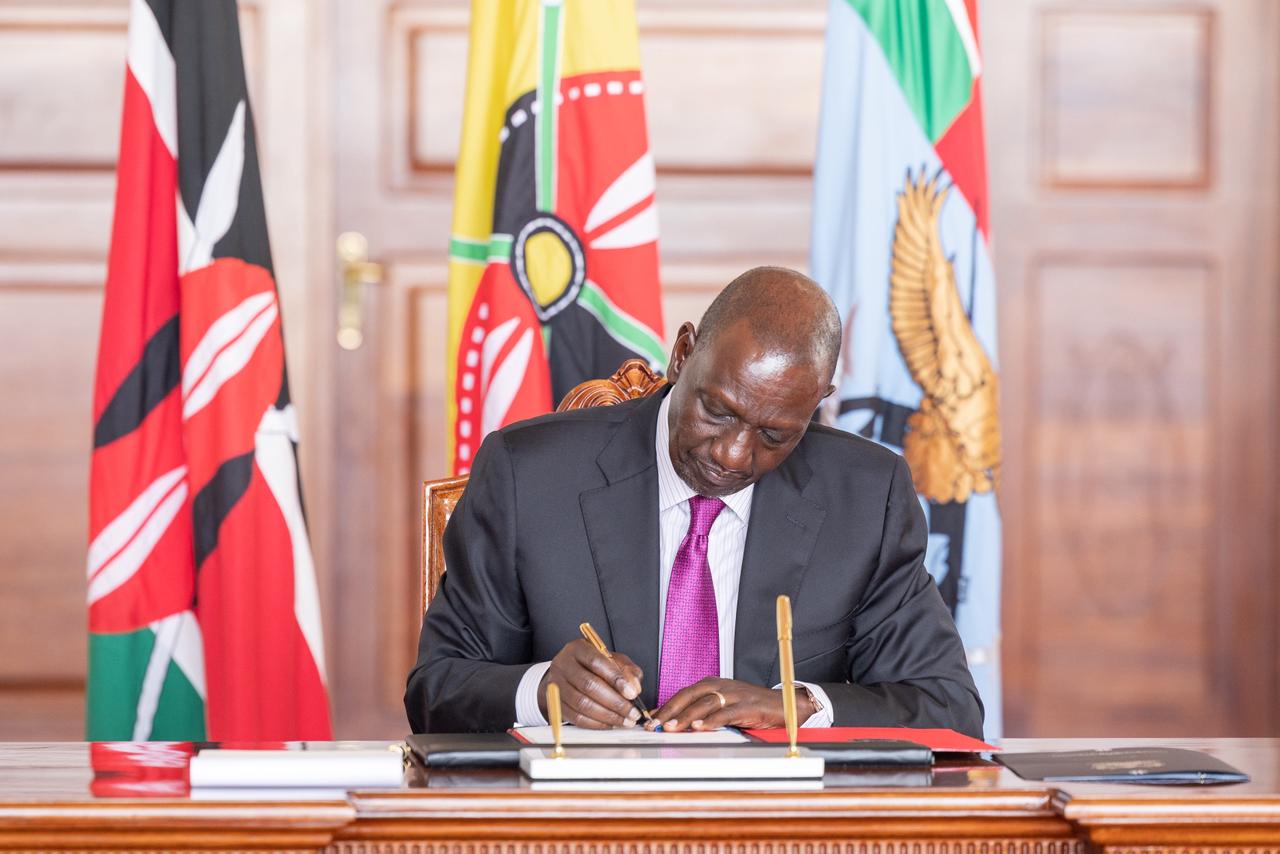
President Ruto Assents the National Disaster Risk Management Bill, 2023 into Law
A Landmark Step Towards Strengthening Kenya’s Disaster Preparedness and Response
President William Ruto has assented the National Disaster Risk Management Bill, 2023 into Law, marking a historic milestone in Kenya’s efforts to build a resilient and coordinated disaster management system. The new law establishes a comprehensive legal and institutional framework for disaster risk management in the country through the creation of the National Disaster Risk Management Authority (NDRMA) and County Disaster Risk Management Committees.
The enactment of this law comes at a critical time when Kenya continues to face recurring disasters, including floods, droughts, landslides, fires, disease outbreaks, industrial accidents, and the growing impacts of climate change. For many years, disaster management efforts have largely relied on fragmented policies and administrative arrangements, often resulting in challenges related to coordination, resource mobilization, and response effectiveness. The new legislation seeks to address these gaps by providing a clear legal foundation for disaster preparedness, mitigation, response, recovery, and reconstruction.
Establishment of a National Disaster Risk Management Authority
A key feature of the new law is the establishment of the National Disaster Risk Management Authority, which will serve as the principal institution responsible for coordinating disaster risk management activities across the country. The Authority will provide strategic leadership, facilitate coordination among government agencies, mobilize resources, and promote disaster risk reduction initiatives.
The Authority is expected to enhance national preparedness by ensuring that disaster management activities are undertaken in a structured, coordinated, and proactive manner. This represents a shift from reactive emergency response to a more comprehensive risk management approach that focuses on prevention, preparedness, and resilience building.
Strengthening Coordination Between National and County Governments
The law also establishes County Disaster Risk Management Committees and County Disaster Risk Management Centres, providing a framework for coordination between the national and county governments. This is particularly important given Kenya’s devolved governance system, where counties play a crucial role in responding to emergencies and protecting vulnerable communities.
The committees will be responsible for developing county disaster management plans, coordinating preparedness measures, facilitating emergency response operations, and ensuring effective recovery efforts following disasters. The new framework will help eliminate overlaps and clarify the roles and responsibilities of various stakeholders involved in disaster management.
Legal Basis for Declaration of National Disasters
Another significant provision of the law is the establishment of a clear statutory basis for the declaration of a national state of disaster. The legislation empowers the President to declare a national disaster when circumstances require a coordinated national response. It further provides mechanisms for mobilizing resources, coordinating emergency interventions, and facilitating the evacuation and protection of affected populations during major emergencies.
This provision is expected to enhance the speed and effectiveness of government response during large-scale disasters by ensuring that critical decisions can be made within a legally recognized framework.
Enhancing Climate Resilience and Disaster Risk Reduction
The law recognizes the growing threat posed by climate change and integrates disaster risk reduction into national development planning. As climate-related hazards become more frequent and severe, the legislation provides a platform for strengthening resilience in communities, infrastructure, and critical sectors of the economy.
By promoting risk assessments, early warning systems, preparedness planning, and public awareness initiatives, the Act supports Kenya’s commitment to international frameworks such as the Sendai Framework for Disaster Risk Reduction and the Sustainable Development Goals.
NDOC’s Longstanding Efforts Finally Realized
For the National Disaster Operations Centre (NDOC), the enactment of the National Disaster Risk Management Act represents the realization of a long-standing vision. NDOC has consistently championed the establishment of a comprehensive legal framework to guide disaster management in Kenya. Through years of stakeholder engagement, policy advocacy, coordination, and technical support, the Centre has played a pivotal role in advancing the disaster risk management agenda.
The new law provides the clarity and institutional support that NDOC and other stakeholders have sought for many years. It creates an enabling environment for more efficient coordination of disaster preparedness and response efforts while strengthening collaboration among government agencies, development partners, humanitarian organizations, and local communities.
A New Era for Disaster Management in Kenya
The signing of the National Disaster Risk Management Act ushers in a new era for disaster management in Kenya. The law provides a robust framework for preventing disasters where possible, reducing vulnerabilities, protecting lives and livelihoods, and ensuring swift and coordinated responses when emergencies occur.
As the country continues to face complex and evolving disaster risks, the successful implementation of this legislation will be critical in building a safer, more resilient, and disaster-ready Kenya. The Act not only strengthens institutional capacity but also demonstrates the Government’s commitment to safeguarding citizens and promoting sustainable development through effective disaster risk management.