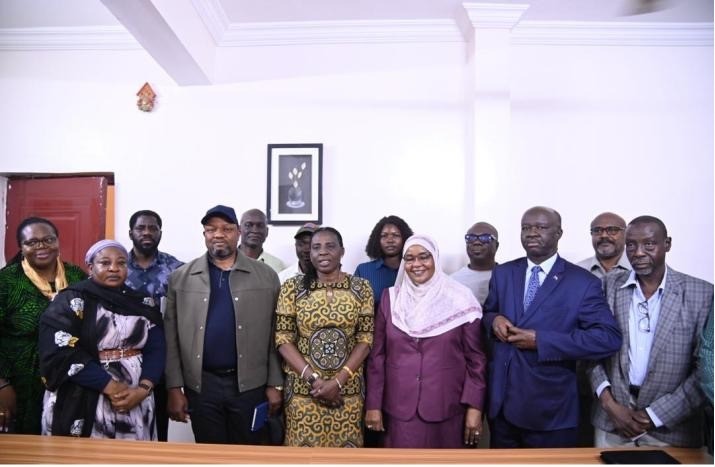
AU Humanitarian Mission to Sudan
NDOC Deputy Director Col (Rtd) Francis Emathe was part of the AU team that visited the port of Sudan between 23rd October, 2025 and 31st October 2025. The AU delegates comprised of representatives from Ghana, Liberia, Nigeria, South Sudan, Zimbabwe, Kenya and officials from the AU.
The team visited UNHCR, IOM, a refugee camp at a place called Darser, OCHA, Humanitarian Affairs Commission, the Sudan Red Cross Society and the ICRC offices.
Summary Report
Sudan remains engulfed in a complex humanitarian emergency, driven by prolonged conflict, mass displacement, and the collapse of essential public services. Over 20 million people are affected, including 11.8 million internally displaced persons (IDPs), with 4.1 million residing in hard-to-reach areas. The humanitarian response is critically underfunded, with more than 73% of required financing unmet. In response, the African Union (AU) undertook a mission to engage with key government institutions, humanitarian partners, and affected communities to assess urgent needs, coordinate response efforts, and identify strategic entry points for AU support.
Key Government Engagements and Findings
The Sudanese Humanitarian Aid Commission (HAC) has made notable progress in streamlining humanitarian access procedures, achieving a 95% completion rate across 34,750 coordination requests. Despite improved operational efficiency, insecurity and funding shortfalls continue to hinder response efforts. HAC emphasized the need for AU support in strengthening early warning systems, recovery planning, and donor coordination mechanisms.
The Ministry of Health reported catastrophic damage to the health system, with 70% of facilities destroyed and losses amounting to USD 11 billion. Cholera and dengue outbreaks remain active, although over 20 million cholera vaccine doses have been administered. The Ministry has identified 40 priority health reconstruction projects valued at USD 100 million and expressed interest in AU collaboration to advance recovery.
The Ministry of Human Resources and Social Development leads efforts in displacement management and social protection but faces significant challenges due to insecurity, inflation, and overwhelming demand. The Ministry recommended AU support in institutional capacity building, reintegration programming, and expansion of social protection services.
Humanitarian Partner Engagements
The Sudanese Red Crescent Society (SRCS) reached over 1.1 million people in 2025, despite operating under severe insecurity and financial constraints. The organization called for AU support in enhancing volunteer protection, operational capacity, and donor engagement.
The International Organization for Migration (IOM) documented evolving displacement patterns and critical gaps in health, water, sanitation, education, and protection services. IOM advocated for AU involvement in early warning systems, reintegration planning, and protection mechanisms.
UNOCHA highlighted logistical and funding challenges amid rising humanitarian needs projected for 2026. The agency urged the AU to lead advocacy efforts, facilitate civil-military coordination, and mobilize strategic resources. On the other hand, UNHCR reported 9.9 million IDPs and 3 million Sudanese refugees abroad. The agency emphasized the importance of AU collaboration in resilience programming, return frameworks, and the establishment of humanitarian corridors.
The International Committee of the Red Cross (ICRC) provided health, WASH, food, and protection services to over 1.1 million people. ICRC recommended AU support in expanding access, scaling emergency interventions, and reinforcing protection mechanisms.
Field Visit to Darser IDP Camp
During a field visit to Darser IDP Camp, the AU delegation observed critical gaps in food, water, sanitation, education, and protection services among the 107 households residing there. The AU distributed essential food and non-food items, marking the first targeted support received by the camp. Community members expressed urgent needs for menstrual hygiene kits, potable water, educational materials, and livelihood support.
Expert Observations and Strategic Recommendations
Experts noted that the AU’s delayed engagement risks reputational damage and called for urgent operational re-engagement. Cultural barriers continue to silence survivors of sexual violence, necessitating AU-led advocacy and culturally sensitive policy reform. Livelihood recovery efforts should prioritize vocational training, market linkages, and climate-smart agriculture. Education infrastructure is severely strained, with overcrowded classrooms and a lack of materials, requiring AU investment in facilities and teacher incentives. Strengthening institutional capacity, particularly in early warning systems and joint post-emergency assessments, is essential for long-term resilience.
Agreed Actions and Way Forward
The AU and its partners agreed to establish a Humanitarian Coordination Desk for Sudan to streamline efforts. Resource mobilization for emergency response and recovery will be prioritized. The AU will advocate for humanitarian access and support ceasefire negotiations. Protection measures for humanitarian workers will be reinforced, and durable solutions for IDPs and refugees will be promoted. Enhanced coordination with partners and strategic communication will underpin the AU’s continued engagement in Sudan’s humanitarian response.