Organizational Structure, Grading and Staffing for the National Disaster Risk Management Authority (NDRMA)
Background and Rationale
The proposal to establish NDRMA follows a directive from the Principal Secretary (PS) for Special Programmes to develop an appropriate organizational structure, staffing establishment, grading framework, and qualification matrix for the proposed Authority.
This initiative is anchored on the proposed transition of the National Disaster Operations Centre (NDOC) into a State Corporation with a comprehensive national mandate on disaster risk management.
The transition is intended to:
Strengthen institutional coordination and response capacity
Enhance preparedness and early warning systems
Improve disaster risk reduction strategies
Ensure effective response and recovery mechanisms
Promote resilience across communities and sectors
The establishment of NDRMA will provide a unified national framework capable of managing disasters proactively and systematically.
Technical Working Session in Murang’a
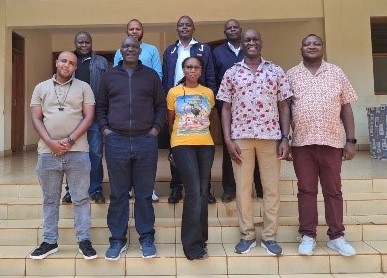
A technical team drawn from the State Department for Special Programmes and the Public Service Commission convened at the Horticultural Research Institute in Murang’a County from Monday, 2nd February 2026 to Friday, 6th February 2026.
The meeting focused on:
Designing an effective organizational structure
Developing a staffing establishment
Creating a grading framework
Preparing a qualification matrix aligned with national public service standards
This exercise represents a critical milestone in institutionalizing disaster risk management in Kenya.
Key Outputs of the Report
The report presents comprehensive recommendations aimed at operationalizing the Authority once the Disaster Risk Management Bill is enacted into law. The proposed framework includes:
1. Organizational Structure
A streamlined and functional structure designed to ensure:
Clear reporting lines
Defined roles and responsibilities
Efficient coordination between national and county levels
Strong operational, technical, and administrative support units
2. Staffing Establishment
A detailed staffing plan outlining:
Core technical positions
Support and administrative roles
Specialized disaster risk management experts
Field coordination teams
The staffing model ensures adequate human resource capacity to handle both emergency response and long-term risk reduction functions.
3. Grading Framework
A harmonized grading structure aligned with public service standards to:
Promote fairness and career progression
Ensure accountability
Support performance-based management
Attract and retain skilled professionals
4. Qualification Matrix
A comprehensive qualification framework specifying:
Academic requirements
Professional certifications
Technical competencies
Experience thresholds for various roles
This matrix ensures that NDRMA is staffed by competent, highly qualified personnel capable of managing complex disaster risk scenarios.
Towards a Robust and Future-Ready Authority
The proposed National Disaster Risk Management Authority is envisioned as a professional, well-resourced, and strategically positioned State Corporation that will:
Safeguard lives and livelihoods
Protect national development gains
Strengthen community resilience
Enhance inter-agency coordination
Promote evidence-based disaster risk management
It is hoped that this report will serve as a practical guide for decision-making and implementation, providing a solid foundation for building a robust, professional, and future-ready National Disaster Risk Management Authority.
With the enactment of the Disaster Risk Management Bill, Kenya will take a transformative step toward a safer, more resilient nation equipped to manage disasters effectively and sustainably.