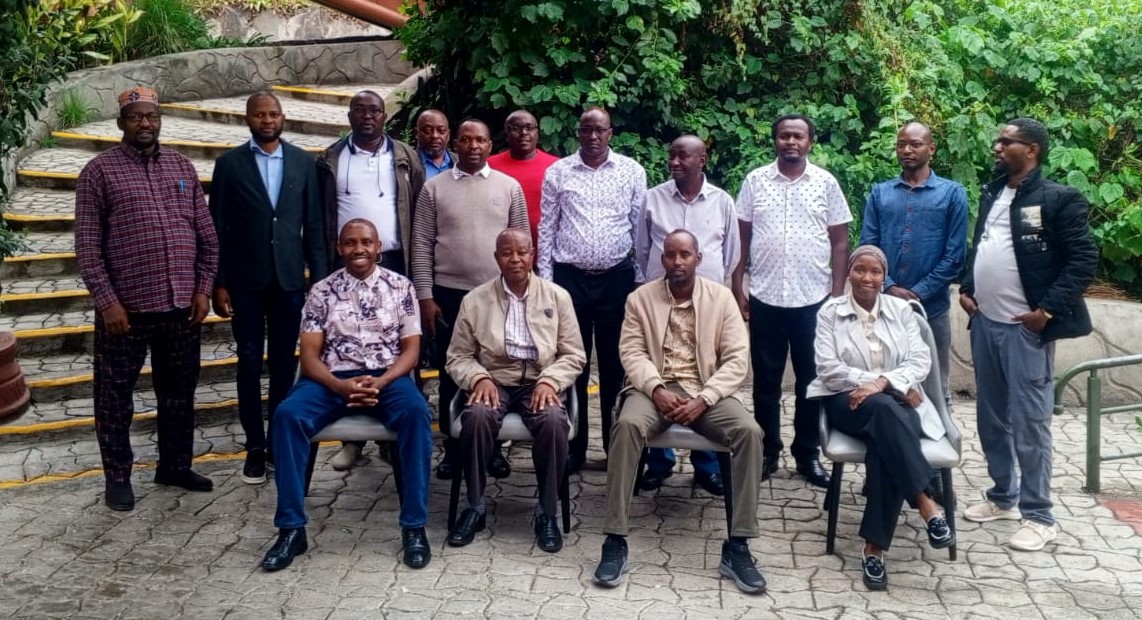
Flood Trigger Validation Workshop Strengthens Early Warning and Anticipatory Action in Isiolo and Samburu Counties
A two-day Flood Trigger Validation Workshop for Isiolo and Samburu Counties was held on 26–27 February 2026 at Panorama Park Hotel in Naivasha, bringing together representatives from national government institutions, county governments, humanitarian organizations, and technical experts working in disaster risk management.
The workshop focused on reviewing, validating, and harmonizing flood trigger indicators and thresholds for the two counties, particularly along the Ewaso Nyiro Basin, an area frequently affected by seasonal flooding. These floods often threaten livelihoods, infrastructure, and human life, making effective early warning and preparedness systems essential.
The meeting emphasized strengthening Early Warning Systems (EWS) and linking them with Anticipatory Action (AA) mechanisms to ensure that preparedness and response measures are activated before disasters occur.
Strengthening Anticipatory Action
The workshop was officially opened by Maj. Eliud Kogo from the National Disaster Operations Centre (NDOC), who highlighted the growing importance of anticipatory action in disaster management.
In his opening remarks, Maj. Kogo emphasized the need to strengthen anticipatory action frameworks at both national and county levels. He noted that proactive preparedness, informed by early warning information, can significantly reduce disaster impacts on communities.
He also called for a shift from traditional disaster response approaches to risk-informed preparedness strategies, guided by Disaster Risk Management (DRM) and Disaster Risk Reduction (DRR) principles. According to him, validating flood and drought triggers is essential to align county-level systems with national early warning frameworks and ensure coordinated responses.
Participants were also encouraged to strengthen inter-agency collaboration and documentation of lessons learned, which will help build a strong national repository of disaster management knowledge.
Role of NDOC in Flood Trigger Validation
During the workshop, NDOC presented the background and rationale for its involvement in the flood trigger validation process. Flooding along the Ewaso Nyiro Basin continues to pose significant humanitarian and socio-economic risks to communities in Isiolo and Samburu counties.
NDOC’s participation aims to ensure that county-level flood triggers are aligned with national early warning systems and supported by credible meteorological and hydrological data. The process also seeks to strengthen coordination between national and county governments while enhancing preparedness and anticipatory action mechanisms.
Key responsibilities of NDOC include providing technical oversight, coordinating multi-agency engagement, managing information and situation reporting, activating emergency coordination mechanisms, and supporting capacity strengthening across institutions.
The workshop also sought to develop operational county-specific flood trigger mechanisms, improve coordination among stakeholders, strengthen early warning dissemination, and reduce flood impacts through timely preparedness and response.
Using the Antecedent Precipitation Index for Flood Monitoring
One of the key technical sessions focused on the Antecedent Precipitation Index (API), presented as a potential flood trigger indicator. The API is a hydrological tool used to estimate soil moisture conditions based on previous rainfall.
High API values indicate that soils are already saturated, reducing the ability of the ground to absorb additional rainfall. As a result, even moderate rainfall events can quickly generate surface runoff and increase the risk of flooding.
During the presentation, operational thresholds were discussed as potential triggers for flood early warning:
API ≥ 30: Flood watch – increased vigilance and monitoring of weather forecasts.
API ≥ 45: Alert level – heightened monitoring and notification of community leaders.
API ≥ 55: Flood warning – activation of response if rainfall forecasts exceed 20 mm within 24 hours.
Monitoring continuous exceedance of the API threshold can help authorities activate early warning alerts, verify flood events, and improve lead time for response.
Aligning with Kenya’s Anticipatory Action Roadmap
The workshop also provided an overview of the Kenya Anticipatory Action Roadmap (2024–2029), which guides national efforts to integrate anticipatory action into disaster risk management.
The roadmap is organized around seven key pillars: early warning, early action, coordination and governance, research and innovation, policy and advocacy, financing, and monitoring and evaluation.
Within this structure, NDOC chairs the Anticipatory Action Technical Working Group (AA-TWG), while the Kenya Red Cross Society (KRCS) serves as the secretariat. These institutions coordinate the implementation of anticipatory action activities and ensure collaboration among government agencies and humanitarian partners.
Lessons from Anticipatory Action Initiatives
Participants also learned from ongoing anticipatory action initiatives, including the WAHAFA Fuel Project, which was activated in Marsabit County in September 2025 following drought forecasts.
The project demonstrated how early warning information can trigger proactive measures such as rehabilitation of water sources, early warning messaging, community engagement, cash transfers, livestock feed distribution, and livestock disease surveillance. These interventions helped communities prepare for and mitigate the effects of the predicted drought.
The session highlighted the importance of linking forecast-based triggers with early action interventions to protect livelihoods and reduce humanitarian impacts.
Strengthening Early Warning Systems
Additional presentations explored both drought and flood early warning indicators used in Kenya. These include meteorological indicators such as heavy rainfall events, hydrological indicators such as rising river levels, environmental conditions like blocked drainage systems and settlements on flood plains, and community-based observations such as localized flooding or rising river levels.
Participants agreed that combining multiple indicators—including satellite data, hydrological monitoring, and community observations—provides a more reliable basis for flood early warning and timely anticipatory action.
Building County-Level Coordination
The workshop also highlighted progress made in Isiolo County, where an Anticipatory Action Technical Working Group was established in November 2025. The group coordinates early action implementation and resource mobilization while working closely with key institutions such as the National Drought Management Authority and the Kenya Meteorological Department.
The county-level TWG plays a crucial role in ensuring that early warning information is translated into timely actions that protect communities.
Moving Toward Resilient Communities
The Flood Trigger Validation Workshop provided an important platform for collaboration among national and county institutions, technical experts, and humanitarian partners working to reduce flood risks in northern Kenya.
By validating flood trigger mechanisms and strengthening coordination frameworks, stakeholders are taking significant steps toward improving disaster preparedness and anticipatory action systems.
Moving forward, sustained collaboration, investment in data systems, and strong community engagement will be essential to ensure that early warning information translates into effective early action. These efforts will ultimately help protect lives, safeguard livelihoods, and build resilience among vulnerable communities living along the Ewaso Nyiro Basin and across Kenya’s arid and semi-arid lands.